What I’d really like for Mother’s Day this year

By Marilyn Watkins, from Washington Policy Watch:
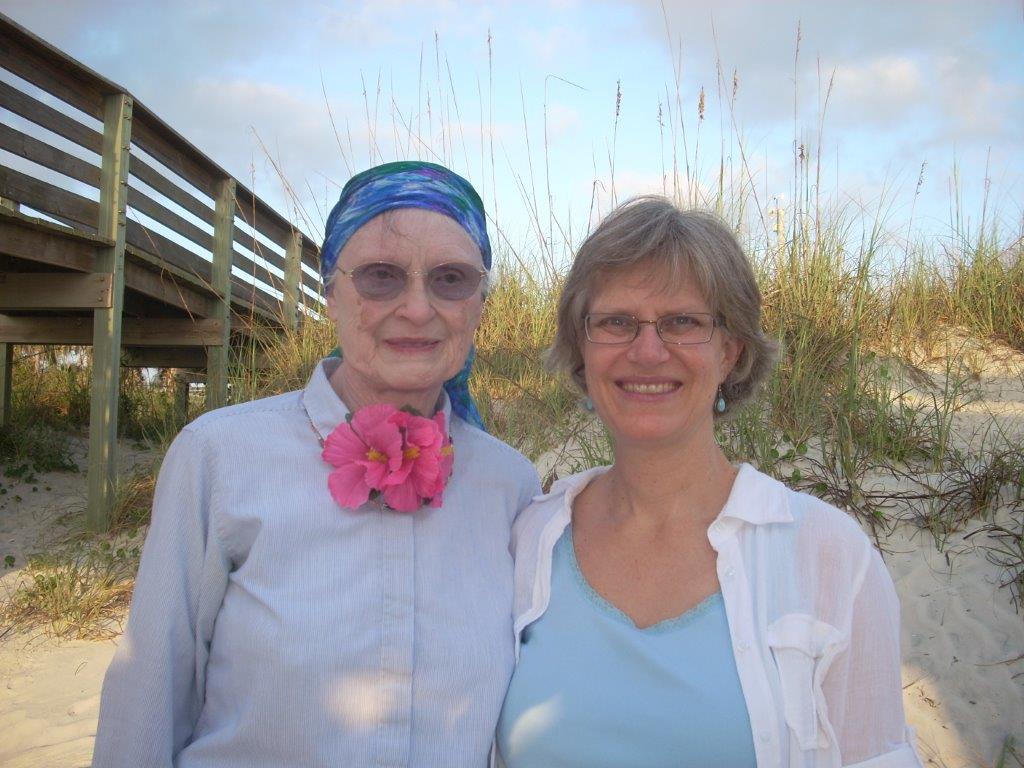
Marilyn and her mother

I’ve been a mom for 28 years now – and a daughter for a lot longer. At this point, I’d rather have time with my sons for Mother’s Day than the little handmade gifts they used to give me when they were little. And I know my own mom would appreciate the same from me.

I also know, both as a giver and receiver of maternal love, how strong the instinct for self-sacrifice is. My mom scrimped and saved, never spending on herself, so her 5 kids could all enjoy music lessons and daily swimming in the hot Indiana summers, even on a modest family income. Now she faces serious health challenges, but still expresses appreciation for calls or visits from her on-the-go family – rather than complaining we don’t spend enough time with her.

The right to some time off with income is in fact the best ways we as a nation could honor moms this Mother’s Day.

Without legal requirements in place, only 12% of American workers have access to paid family leave and 4 in 10 get no paid sick leave. The lack of paid leave has real consequences when  60% of preschoolers and 70% of school-age children here in Washington have all their parents in the workforce.

The United States is one of the few countries in the world without guaranteed paid maternity leave, sick leave, and vacation time. Our children suffer the consequences.  According to the CIA Factbook, the US has higher rates of infant mortality than 50 other countries. Cuba, Greece, Slovenia, and French Polynesia are among those 50 countries doing better than us.  A 2013 United Nations reporton the health and wellbeing of children ranked the United States 26th out of 29 wealthy countries. And 22% of American children live in poverty.

How can we do better by our children – and our mothers?

We have practical policy models right here in the U.S. Seattle along with 4 other cities and the state of Connecticut have adopted paid sick days laws. Moms in these places can stay home with a sick child or take an ailing parent to the doctor and still put groceries on the table that week. They can also stay home when sick themselves, keeping the workplace healthier, safer, and more productive.

Five states have established family and/or medical leave insurance pools that provide workers with income when a serious illness or injury or new baby require longer periods off work. Not surprisingly, women in these states take longer maternity leaves. They breastfeed longer and take their babies in for more immunizations. And those moms are more likely to be in the workforce and earning more a year after giving birth. Moreover, new fathers also take longer leaves, keeping them more involved with their kids long term both emotionally and financially.

These paid leave policies are a good starting point to recreate the opportunity that we Americans pride ourselves on, but seems to have slipped away in the last generation.

We have lots of studies documenting that paid leave improves the health and wellbeing of mothers and babies, children and seniors, workers and employers. Unfortunately, data and common sense are not what drive policy change. To make paid sick days and family and medical leave insurance a reality, American mothers– and the sons, daughters, parents, and partners who love them –  have to break through the instinct for self-sacrifice and demand new rights from state legislators and Congress.

If the people who represent us now continue to deny us equal opportunity for paid time off for health and family needs, then it’s time to vote them out and vote in people who will pay attention.

That’s what I’d really like for Mother’s Day this year.

Mark Mother’s Day by Reforming Family Leave Laws in US

By Janet Walsh, from Thompson Reuters

janet walsh
Janet Walsh, Deputy Women’s Rights Director at Human Rights Watch.

Diana T. worked full-time for a large retail store in the US when she became pregnant. Her manager was unhappy about her pregnancy and about Diana’s six-week unpaid maternity leave. Her employer refused to pay her accrued sick time during leave. Diana’s baby was born with asthma, and doctors suspected she had cystic fibrosis. Diana had severe post-partum depression.

Diana’s employer threatened to terminate her when she asked for time off for doctor visits. She barely managed to keep up with health visits for her infant daughter, and never got treatment for depression. Diana had to depend on family to help her buy food, diapers, and other basics during the time she was off work without pay.

Diana is one of millions of US workers with no paid family leave. The Family and Medical Leave Act grants workers unpaid job-protected leave for up to three months to care for parents, children and spouses with serious illnesses, to bond with new children, and to manage their own serious health conditions. But this applies only to enterprises with 50 or more employees, and eligibility requirements exclude many workers. Indeed, more than 40 percent of the American workforce has no protection under this law. Only about 12 percent of the workforce has access to paidfamily leave.

Public debate on US work-family policies ignited this year, triggered in part by Professor Anne-Marie Slaughter’s article in The Atlantic, “Why Women Still Can’t Have it All,” and Facebook COO Sheryl Sandberg’s book, “Lean In: Women, Work and the Will to Lead.” Both Slaughter and Sandberg call for paid family leave, among other steps to reform the US work-family culture. Critics claim that Slaughter and Sandberg are out of touch with low-income women. But when it comes to paid family leave, reforms they call for would make a profound difference for low-income workers.

Just California and New Jersey guarantee six weeks of paid family leave under law—financed entirely by minimal worker payroll contributions (in New Jersey, workers will pay a maximum of $30.90 for 2013). A handful of other states guarantee temporary disability insurance to birth mothers. For all other workers, it’s up their employers whether they offer paid family leave.

I interviewed Diana and more than 60 other parents in 17 states about US work-family policies for a 2011 Human Rights Watch report. Most of the parents had no paid family leave, and were lucky if they could string together sick pay or other leave to deal with major life events or catastrophes. Parents recounted how short and unpaid leave after childbirth or adoption contributed to delaying immunizations and health visits for babies, postpartum depression, and other health problems. During unpaid leave, many went into debt, and some resorted to welfare and bankruptcy.

Many parents I interviewed said they were forced to choose between a paycheck and their family’s wellbeing. This was especially true for low-income workers, like Diana.  US Bureau of Labor Statistics data shows that workers in the highest 25 percent of average wages are nearly four times more likely to have paid family leave than workers in the lowest 25 percent. Those in the highest 10 percent of wages are five times more likely to have paid family leave than workers in the lowest 10 percent.

The US lags far behind other countries when it comes to policies on reconciling work and family obligations. Every industrialized nation in the world—except the United States—guarantees paid leave for new mothers, and 81 countries do for new fathers, generally financed by social insurance systems. Countries that provide better protections for working families reap gains ineconomic competitiveness and productivity. Paid leave research in many countries has shown that such policies increase breastfeeding, immunizations, and health visits for babies; reduce infant mortality and postpartum depression; raise productivity and employee morale; and decrease employee turnover costs. Paid leave can help avert family poverty spells, which often coincide with the birth of a baby.

The California and New Jersey public paid leave insurance programs are working well for businesses and workers.  Most businesses responding to a 2011 survey on California’s program said it had either a positive effect or no noticeable effect on productivity, profitability, turnover, and employee morale. These programs do need to work harder to raise awareness among workers. The California survey, for example, found that low-wage workers, Latinos, and immigrants were the least aware of the program. But those who enrolled described positive results: breastfeeding, for example, doubled in duration for those who used the California program.

As the US marks Mother’s Day on May 12, I think of Diana and millions of other US mothers—and fathers—who just want to be good workers and good parents. It’s time for US policies to offer some basic support to help them achieve both, including paid family leave under law.

Janet Walsh is deputy women’s rights director at Human Rights Watch and the author of “Failing its Families: Lack of Paid Leave and Work-Family Supports in the US.” Follow her on Twitter at: @JanetHRW.

Paid Sick Days Opponents Continue to Hide Behind Preemption

By Vicki Shabo, from the National Partnership for Women and Families:

Orange County, Flordia Commission meeting on 9-11-12 (Joe Ruble)

Last month, I wrote about a disturbing trend: States are passing “preemption” laws that prohibit a growing number of cities and counties from adopting their own paid sick days standards. Sadly, these misguided attacks on local democracy have been spreading rapidly, as legislators put the interests of the national big business lobby ahead of the interests of their constituents. Now, there are paid sick days preemption bills or laws in 13 states.

This trend is no coincidence. In fact, it is a well-coordinated effort to thwart paid sick days bills just as momentum for this common sense policy continues to build. We know that the National Restaurant Association circulated a draft preemption bill at a 2011 meeting of the corporate-funded American Legislative Exchange Council (ALEC). Since then, the association and other groups have been working behind the scenes to advance very similar bills.

Take the case of FloridaEighty percent of Floridians say that workers should be able to earn paid sick days, and six in 10 want localities to be able to make their own laws. But Florida legislators refuse to listen to voters. Instead, big business associations and local power players like Disney and Darden Restaurants have convinced them to shut down local governments’ ability to pass their own paid sick days standards. It is shameful that the same state legislators who claim to be for “local government” are pushing through a policy that essentially ties its hands.

Michigan’s battle against preemption is also ongoing. As Working America points out, legislators in the state who have railed against “big government intrusion” have changed their tune to fulfill the wishes of the business lobby. As in Florida, Michigan voters say that workers should be able to earn paid sick days. They know that if Michigan’s preemption bill passes, it will be families – like the moms who make up the local advocacy group Mothering Justice and their kids – who will suffer most.

This same pattern is repeating itself across the country: LouisianaMississippiKansasTennessee.Arizona. A preemption bill is introduced – usually by a legislator who is an ALEC member, and usually with the support of the big business lobby – and then it’s fast-tracked through the legislature and quietly signed by the governor. In these five states, the new laws preempt not only paid sick days, but also local minimum wage and other ordinances proven to improve workers’ lives.

The bill in Arizona – now law – is particularly disturbing. In 2006, Arizona voters passed a statewide ballot measure forbidding the legislature from doing exactly what it just did: preempting local wage and benefits standards. According to the state constitution, the legislature must meet certain strict requirements to overturn a voter-approved measure. It hasn’t done so, making the preemption bill illegal and open to litigation. Arizonans can thank legislators like the sponsor of the bill, Rep. Thomas Forese (an ALEC member), for the costly lawsuit that will almost certainly be filed.

The Indiana bill is also troubling. In addition to preempting workers’ rights, it may overturn local anti-discrimination ordinances meant to protect the right of LGBT individuals to keep their jobs.

The other states considering preemption legislation are Alabama and South Carolina. The South Carolina bill was introduced by an ALEC Task Force chair, Rep. William Sandifer, and is being pushed through quickly and under the radar, leaving concerned advocates little time to speak out.

Washington and Oklahoma also considered preemption bills in 2013, but those bills have not passed.

Almost all of these preemption bills have been pushed through quietly, without the knowledge of activists or legislators who might ask questions about their provenance and usefulness. But, as the intent of the big business lobby becomes clearer, and as it becomes more obvious that these bills have nothing to do with the well-being of states or their residents, sponsors will surely have a tougher time defending their attempts to usurp power from the people to whom it truly belongs: voters.