20 Years After FMLA, We Can Do Better for Working Families

evelin and fmaily
Evelin with her husband and kids

Until 1993, most American workers were on their own when they welcomed a new baby or faced a personal or family health crisis. But on August 5, 1993 – 20 years ago today – the Family and Medical Leave Act (FMLA) took effect. The FMLA guarantees many employees the right to take up to 12 weeks of unpaid leave for the birth or adoption of a child or for serious health conditions.

We celebrate that the FMLA has helped millions of workers – but recognize that it falls far short for today’s families and economy.

The FMLA does not provide pay or cover common illnesses like the flu. It also does not protect workers in companies with fewer than 50 employees, who have been on the job less than a full year, average fewer than 25 hours of  work per week, or care for loved ones not included in the definition of “family.”

Washington Work and Family Coalition is working to fill the gaps with Paid Sick Days and Family and Medical Leave Insurance. During the 2013 legislative session, our bills were approved by the House Labor and Workforce Development Committee, but with a sharply divided legislature, didn’t make it through the full process.

Without this next generation of protections, mothers like Heidi are going back to work before recovering from childbirth, and workers like Evelin’s father are postponing needed surgery. Paid Sick Days and Family and Medical Leave Insurance are smart investments in public health, our youngest children, independent living for seniors, worker productivity, family economic security, and business prosperity.

It’s time to demand action from our lawmakers!

Take Action:

Take a few moments now to celebrate FMLA’s 20-year anniversary and demand the next generation of policy advances we need in today’s economy. In 5 minutes you can:

  1. Submit a letter to the editor to your local newspaper (no more than 200 words), or
  2. Contact your state legislator (Legislative Hotline: 1.800.562.6000)

Here’s what to say:

  • Tell why paid leave is important to you: How has access or lack of access to paid time off impacted your family?
  • Share the facts: All workers need access to paid leave. Paid Sick Days and Family and Medical Leave Insurance are smart investments in public health, our youngest children, independent living for seniors, worker productivity, family economic security, and business prosperity.
  • Demand action from your legislators, community leaders and neighbors: City Councils can follow the lead of 5 other cities in adopting paid sick days standards. And our state legislature must be prepared to act in 2014, to fully implement Family and Medical Leave Insurance and establish Paid Sick Days standards for Washington.

It’s time for lawmakers to step up for working families!
Washington State Labor Council Passes Resolution in Support of Paid Leave

Last week, the Washington State Labor Council (WSLC), AFL-CIO, hosted their 2013 State Convention. The convention is an annual gathering of of the WSLC’s more than 500 affiliated labor organizations, representing about 400,000 members across Washington. Members meet to discuss issues affecting the state’s working families and to establish WSLC’s policies and priorities for the coming year.

During the convention, the body passed a resolution in support of paid sick days, family and medical leave insurance, and the work of the Washington Work and Family Coalition to implement these paid leave programs.

The resolution shows broad support from the labor community for paid leave – an important metric in Washington, the nation’s fourth most unionized state. In 2014, the Washington Work and Family Coalition will be leveraging community support to drive paid sick days and family and medical leave insurance legislation forward.

You can read the full WSLC resolution below –

In Support of Paid Sick Days and Family and Medical Leave Insurance

Resolution # 26

Submitted by UFCW 21

WHEREAS, most workers have limited paid leave to deal with their health needs, and 40% have no paid sick leave, so that even a minor illness or injury can lead to a family economic crisis; and

WHEREAS, in addition to annual paid sick leave for preventative health care and short term illnesses, from time to time workers need longer periods of time off to welcome a new child, recover from surgery or care for an aging parent; and

WHEREAS, as Unionists, we are committed to the principle that all workers should have the right to earn paid sick days for routine health needs of themselves and their families, and to periods of paid family and medical leave to care for a new child or serious health condition; and

WHEREAS, the City of Seattle and other jurisdictions have successfully adopted paid sick days standards that protect public health, worker income, and business prosperity; and

WHEREAS, in 2007, the Washington State Legislature passed a limited Family Leave and Medical Insurance program, but did not set up a mechanism for funding the program and has repeatedly postponed implementation; and

WHEREAS, other states, including California and New Jersey, have successfully established programs that provide partial wage replacement during extended leaves for care for a new child or sick family member, or for the worker’s own disability or serious health condition, funded through modest payroll taxes; and

WHEREAS, the “Washington Work and Family Coalition” is working to establish statewide standards for paid sick days and to fully fund and expand the Family and Medical leave Insurance Program to include caring for ill family members and the worker’s own disability as well as care of a new child, along with longer periods of leave, higher benefits, and premiums based on a percentage of workers’ pay; now, therefore, be it

RESOLVED, the Washington State Labor Council, AFL-CIO, supports the principle and practice of paid sick days and family and medical leave insurance and will work with the “Washington Work and Family Coalition” to promote Paid Sick Days and an expanded family and medical leave insurance program in the state of Washington; and be it finally

RESOLVED, that the Washington State Labor Council, AFL-CIO, will forward this resolution to the affiliates of the Council to ask for their support, as well.

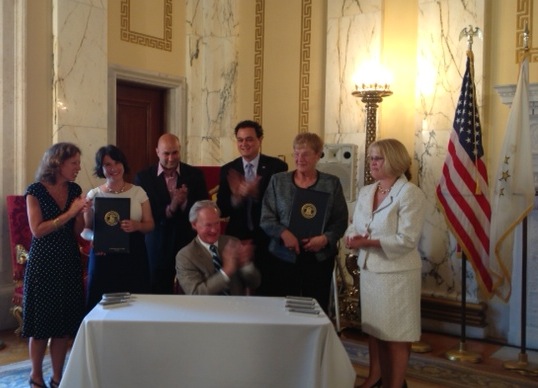
Rhode Island Governor Signs Paid Family and Medical Leave into Law

Photo from Family Values at Work http://www.familyvaluesatwork.org

Families in Rhode Island will now have access to paid family and medical leave thanks to new legislation signed into law by Governor Chafee this week.

Championed by We Care Rhode Island and Family Values at Work, Rhode Island’s Temporary Caregivers Insurance (TCI) allows workers to take paid time off when welcoming a newborn, caring for an ailing family member or recovering from a personal illness. Qualifying workers will receive two-thirds of their weekly wages for up to four weeks.

The program will be funded by minute employee contributions. For an employee making $40,000 a year, it will only cost forty-six cents a week. California and New Jersey have similar paid leave programs, and studies show the policies benefit families and business. Paid leave improves employee retention and lowers turnover costs. Research also shows that parents using paid leave are less likely to become dependent on public assistance, more likely to stay employed and earn higher wages over time.

Washington lawmakers passed paid family and medical leave insurance in 2007, but the program has been delayed through three budget cycles. During the 2013 legislative session, EOI’s Washington Work and Family Coalition (WWFC) advocated for the program’s full implementation, but the republican-controlled state Senate worked against Washington families and attempted to repeal the law all together. WWFC successfully defeated conservatives’ efforts, but lawmakers once again voted to postpone implementation funding.

It’s time for lawmakers to stand with Washington families and launch paid family and medical leave insurance. August 5th marks the 20th anniversary of FMLA – the federal statute that guarantees most workers job-protection and unpaid leave for family and medical reasons. But for many workers, taking weeks of unpaid time off isn’t an option. Washington’s paid family and medical leave program would ensure that every family in Washington has access to paid leave while only costing the average worker ninety-six cents a week.

Washington’s paid family and medical leave program is good for families and good for business. Legislators need to hear from their constituents that paid leave is a priority for their family. Take a moment to contact them today, and challenge lawmakers to support working families during the 2014 legislative session.