Paid family leave can offer many benefits

Paid family leave affects our country and our businesses and the personal lives of the parents trying to strive without it. The United States is one of only four nations in the world without a federal entitlement to paid leave for families (out of around 200 nations). So it is obvious that the “land of the free,” needs mothers (and sometimes fathers) to be provided with rights to a substantial amount of paid leave following the birth of a child.

In Canada the country provides a year or more of paid leave, with 55 percent of pay replaced. The Swedish program provides 13 months of shared leave, paying the parents 80 percent of their salaries, up to a limit. One of the current three states providing paid leave in the United States, California, allows six weeks of leave with 55 percent of usual pay replaced.

Not only was California the first state to jump on board the paid family leave boat, but their businesses say it has had little to no ill effect. A recent study found that “California companies could save $89 million under a paid leave program due to increased employee retention and decreased turn-over; The State of California could save $25 million annually, due to decreased reliance on assistance programs, including TANF and food stamps.” Many individuals currently turn to these programs when taking unpaid leave because of financial hardship.

So families have a choice. Either undergo huge pay cuts and most likely rely on state and federal assistance programs, or get paid the fair share of money they worked for and were taxed for. Parents staying at home instead of having kids in day care is more than just avoiding additional financial burdens. There is an impact on the children. The Infant Feeding Practices Study examines the changes in breastfeeding practices in California relative to other states before and after the implementation of paid leave. Findings show a 10 percent to 20 percent increase of breastfeeding during several important markers of early infancy. Meaning that the more states with paid leave, the more children will get proper nutrition as an infant, and we all know the benefits of breastfeeding: smarter kids.

Think of our country’s future. Paid family leave can be the difference that our citizens need. In Washington state the Legislature passed a paid family leave law in 2007, originally to take effect in October 2009, but the law was never implemented. Join me in supporting the well-being of our county, businesses and families and petition to reinstate the paid family leave law in Washington state.

Emily Fleshman-Cooper is a resident of Sultan.
Original: Everett Herald »

A Long Overdue (Economic) Gift For Our Fathers

Photo credit: Diana Nguyen/Flickr Creative Commons

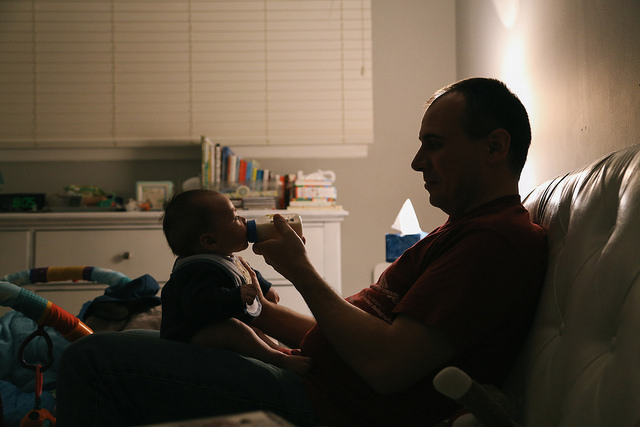
Father’s Day generates less sentimental gushing than Mother’s Day. But as this Father’s Day approaches, I’m reminded that just as struggling moms need fair pay and paid family leave a lot more than flowers, fathers need these policies, too –more than a new tie or camping toaster.

My friend, Gabriela, has spent most of the past two months with her father in hospitals and doctors’ offices. In a few short weeks, he transformed from fit and lively to a weak old man with cancer and a slew of health complications. With her sister juggling two jobs, Gabriela has been the one to take time off work and help her parents navigate through the complex maze of specialists, tests, and insurance forms, while they’ve sought a diagnosis and treatment plan.

My young neighbor Patrick is eagerly awaiting the birth of his first child next month. But he won’t get to spend the rest of the summer as he’d like, caring for his new son and making sure his wife, Caitlin, gets some rest. He’ll be able to take only three weeks off before returning to full days at the office. Caitlin’s maternity leave will be completely unpaid.

If they lived in California where Patrick’s company is based instead of in Washington, they would each qualify for six weeks of paid family leave through the state-run insurance program, and Caitlin would have several additional weeks of paid disability leave during her recovery. That’s better for the baby, the mom, and the dad.

And it’s not just individuals who benefit from access to paid family leave. We know from experience in other states that taxpayers, businesses, and communities are better off, too.

Every child deserves a good start in life, with loving, unstressed parents nurturing them – regardless of geography or economic class. In the five states with family and/or disability leave insurance that assures most women get some paid maternity leave, babies are breastfed longer and have better access to well-baby care –improving their long-term health and access to opportunity. (In addition to California, New Jersey, Rhode Island, New York, and Hawaii have these programs.)

New moms in these states have fewer health complications, are less likely to go on public assistance, and are more likely to be working and for higher wages than women in other states. And the dads take longer paternity leaves. Studies have shown that when fathers forge those early bonds, they are more likely to stay involved with their child long term, with countless emotional, intellectual, and financial benefits for that child.

Having family members present through serious illnesses and final days should also not be a matter of luck. Anybody who’s been through what Gabriela is going through knows that the quality of medical care is higher when family members are there to advocate, coordinate, and participate.

Costs to the health system and state also go down. A Republican legislator who voted against Rhode Island’s paid family leave program is reported to support it now that he’s seen it operate, saying: “If you’re going to keep people out of nursing homes and facilities, you need someone at home to help. Grandma can go home quicker after surgery if someone is at home to make sure she is okay.”

Businesses prosper, too, when employees can take the time they need for family care without facing financial calamity. Productivity goes up, costly turnover goes down. And the boost in family economic security means customers have a little more to spend in local businesses.

We have a simple solution for my friends Patrick and Gabriela, and the thousands of others who are struggling to both provide and care for their families. Earlier this year, the FAMLI Act passed through one committee in the Washington State House, but stalled there. It would provide workers with up to 12 weeks of family or disability leave with partial pay, to care for a close family member – or if they get cancer or are struck by a car themselves. As in the other states with these systems, workers and employers would pay a small payroll premium of one or two dollars a week into the trust fund to cover costs.

Next January our legislators have another shot at passing the FAMLI Act. So this Father’s Day, how about sending a note to your state legislators, asking them to prioritize passing family leave next year, for all the dads and moms and sons and daughters in Washington state.

Original: South Seattle Emerald »

Congratulations Oregon! Statewide paid sick leave bill wins final legislative approval

On Friday, Oregon’s state House passed a bill that would require most employers to offer five days of paid sick leave to their employees. If the governor signs it into law as advocates believe she will, it will be the fourth state in the country with such a requirement.

paid sick leave june 2015

Oregon’s bill applies to businesses with 10 or more employees and allows workers to accrue an hour of sick time for every 30 they work. The leave could be used to care for a worker herself, a family member, or donate it to a coworker. An estimated 47 percent of workers in the state don’t have access to paid sick days, including more than 70 percent of low-wage workers.snackrilege OR psd

After the bill passed, Jeff Anderson, chair of the Oregon Working Families Party and Secretary Treasurer for UFCW 555, said, “This has been a long time in the making, and it’s a big win for the Working Families Party, for my union, and for working families across the state.”

The bill comes after Portland passed its own requirement in 2013 and Eugene passed one last year. City and state laws across the country have picked up momentum in the past couple of years, with 2014 holding the record at 11 passed. Before Oregon’s vote, three others had been passed this year.

Read more from ThinkProgress »