How to truly commemorate Women’s Equality Day

Image: London Student Feminists/Wikimedia (License: CC BY-SA 3.0)

We celebrate Women’s Equality Day on August 26 – the 95th anniversary of women in the U.S. winning the right to vote. It was not an easy victory. It took 72 years, with a multitude of activists using many tactics, from the formal launch of the women’s rights movement at Seneca Falls in 1848 to final passage of the 19th Amendment in 1920.

To win the vote, women petitioned and marched, made speeches and wrote volumes of reasoned arguments. Suffragettes were thefirst to ever picket the White House. Activists endured heckling and ridicule, attacks by mobs, police beatings, arrests, hunger strikes and forced feeding in prison.

Opponents argued women were physically and intellectually incapable of the reasoned thought required for voting, that allowing them to vote would destroy the family and threaten lucrative businesses – especially related to alcohol, that there were higher priorities demanding the attention of lawmakers.

Winning the right to vote was a landmark achievement, but it was never the only goal of women activists and their male allies. The 1848 Seneca Falls convention – attended by approximately 300 women and men, white and black, many of them active Abolitionists – also demanded  the overthrow of all laws that kept women inferior to men, and “the securing to woman an equal participation with men in the various trades, professions and commerce.” Women fought for equality in marriage, access to birth control, and the right to unionize. Three years after women’s suffrage finally passed, Alice Paul convinced a friend in Congress to introduce the Equal Rights Amendment to achieve these broader goals.

Ninety-five years after winning the vote, the ERA has yet to be ratified. Women turn out in greater numbers than men each election day and earn the majority of college and graduate degrees, but we’re a long way from the full equality our foremothers envisioned. Only 4.6% of Fortune 500 CEOs are women – that’s 23 out of 500.Women hold just 19% of seats in Congress, 24% of state legislative seats nationally (33% in Washington), and 17% of big-city mayor posts.

In virtually every occupation, women make less than men. Pay secrecy policies allow employers to get away with paying different wages for the same work. Men more often get rewarded with the plum assignments and promotions, while strong women are considered “difficult” and sidelined. Mothers and women of colorface especially high wage gaps, with single moms and their children experience shocking rates of poverty and near poverty.

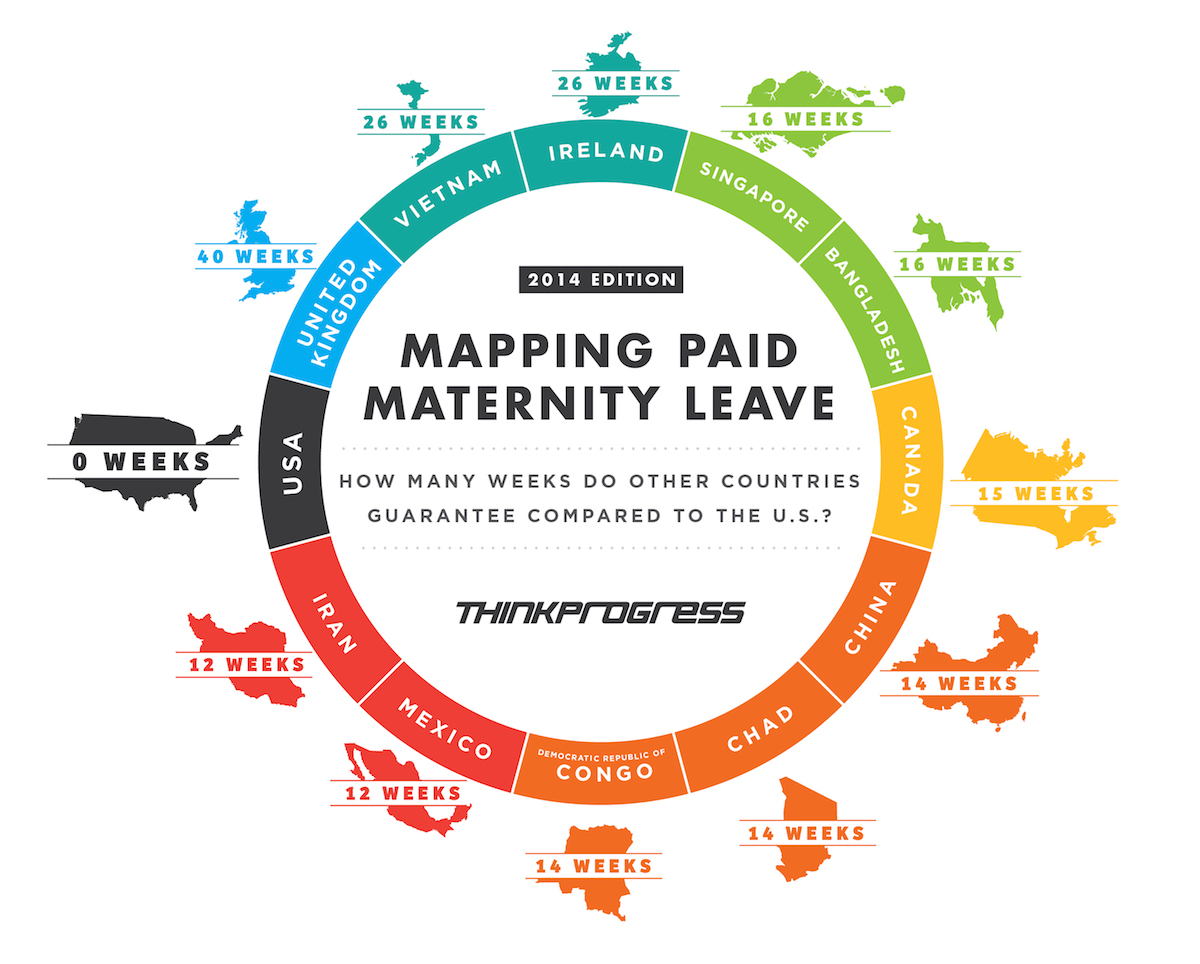
Lack of paid leave is a women’s issue, too. Too many women and men don’t get sick leave to take care of their own health or a sick child or aging parent, and the U.S. remains the only advanced country without paid maternity leave. A recent investigative reportfound that nearly one in four women return to work within two weeks of giving birth despite the devastating impact on their own health and their new babies – because they can’t afford not to.

We aren’t going to get the rest of the way to equality by politely waiting around for a convenient time when it won’t interfere with corporate profits or the priorities of male leaders.

This year, despite three special sessions, Washington’s legislature couldn’t find the time to pass commonsense bills that would move women closer to economic parity – while giving a needed boost to the health and security of families and helping local main street businesses thrive. The 2015 legislature passed fewer bills than anyodd-year legislature going back more than 30 years. The Senatecancelled committee meetings to avoid voting on the Equal Pay Opportunity Act, Sick and Safe Leave, or a $12 minimum wage – which all sailed through the House. The House dropped consideration of Family and Medical Leave Insurance – which would provide paid leave for new parents and workers caring for a seriously ill family member or with their own serious illness or injury – as soon as it passed out of committee and the Senate ignored it completely.

Equal pay, job opportunities, and access to paid leave to care for our children and families’ health should not be partisan issues. We can be grateful to those brave women and men who defied convention and risked bodily harm to win the rights women enjoy today. Will our daughters and granddaughters have any new rights to thank us for – or are we going to pass our problems on to them?

Original: South Seattle Emerald »
The Real War on Families: Why the U.S. Needs Paid Leave Now

Investigation reveals the devastating effects of the lack of paid family leave: Data show nearly 1 in 4 employed mothers return to work within two weeks of childbirth.

credit

Leigh Benrahou began laying plans to have a second child almost as soon as she had her first, a daughter named Johara, in 2011. Benrahou, 32, wanted to time the next birth so that when she returned to work, her mother, who works at an elementary school and has summers off, could babysit. Most importantly, Benrahou wanted to spend as much time as she could with her new baby while also keeping her relatively new job as the registrar at a small college.

While her husband, Rachid, 38, earns enough at a carpet cleaning company to cover their mortgage and food, without her paycheck they’d be forced to live close to the bone. And if she quit her job, Benrahou, who has a masters in nonprofit management, would take a big step backward in what she hoped would be a long career in higher education.

So Benrahou, who has wavy dark blond hair, blue eyes and a tendency to smile even through difficult moments, set about what may be the least romantic aspect of family planning in the United States: figuring out how to maximize time with a newborn while staying solvent, employed and, ideally, sane.

Only in America

Most people are aware that Americans have a raw deal when it comes to maternity leave. Perhaps they’ve heard about Sweden, with its drool-inducing 16 months of paid parental leave, or Finland, where, after about 9 months of paid leave, the mother or father can take—or split—additional paid “child care leave” until the child’s third birthday.

But most Americans don’t realize quite how out of step we are. It’s not just wealthy, social democratic Nordic countries that make us look bad. With the exception of a few small countries like Papua New Guinea and Suriname, every other nation in the world—rich or poor—now requires paid maternity leave.

Paid parental leave frees mothers and fathers from choosing between their careers and time with their infants. For women, still most often the primary caregivers of young children, this results in higher employment rates, which in turn translates to lower poverty rates among mothers and their children.

Research shows that paid leave can also be a matter of life and death for children. By charting the correlation between death rates and paid leave in 16 European countries, Christopher Ruhm, a professor of public policy and economics at the University of Virginia, found that a 50-week extension in paid leave was associated with a 20 percent dip in infant deaths. (The biggest drop was in deaths of babies between 1 month and 1 year old, though mortality of children between 1 and 5 years also decreased as paid leave went up.)

According to the Bureau of Labor Statistics, only about 13 percent of U.S. workers have access to any form of paid family leave, which includes parental leave and other time off to care for a family member. The highest-paid workers are most likely to have it, according to BLS numbers, with more than 1 in 5 of the top 10 percent of earners getting paid family leave, compared to 1 in 20 in the bottom quartile. Unionized workers are more likely to get benefits than nonunionized workers.

What do the rest of American women do without a law that guarantees this basic support? Some new mothers who don’t get paid leave quit their jobs, which can leave them desperate for income and have serious consequences in terms of work opportunities and lifetime earnings. Others may choose not to have children (though it’s impossible to definitively quantify how the difficulty of integrating work and childbirth factors into those decisions). And some try to stitch together their own paid leaves through accumulated vacation time and personal days, or through independently purchased insurance policies.

Full story: In These Times »

Carly Fiorina Has A Laughable, Dangerous Solution To The Paid Leave Problem

You can’t leave this stuff up to CEOs.

"Carly fiorina speaking" by Michael Vadon - Own work. Licensed under CC BY-SA 4.0 via Commons - https://commons.wikimedia.org/wiki/File:Carly_fiorina_speaking.jpg#/media/File:Carly_fiorina_speaking.jpg
“Carly fiorina speaking” by Michael Vadon – Own work. Licensed under CC BY-SA 4.0 via Commons. (details)

New mothers in the United States are often forced to go back to work just a few weeks after having babies. That happens because our federal government, unlike that of any other country in the developed world, offers no provision for paid maternity leave.

But no worries, everyone! Carly Fiorina has a solution. If the former Hewlett-Packard CEO is elected president, she’ll simply fix our economy, making it “so strong that employers are forced to compete for workers by offering better salaries, better leave policies, more time off, and good benefits,” she wrote on Thursday in a blog post for The Huffington Post.

This is a laughable and dangerous way to think about paid leave. One that’s sure to fail women in the United States, particularly those who aren’t lucky enough to work professional jobs at companies enlightened or profitable or large enough to offer paid maternity leave.

We’ve left paid leave up to businesses for too long, and what have they done? Right now only12 percent of employees at privately owned companies have access to paid leave, according to the Department of Labor.

Allowing this to keep happening would do more harm to the economy than Fiorina seems to understand. And paying for federal mandated leave is far cheaper than she seems to realize — even though her home state of California has been pulling it off for more than a decade.

But paid leave isn’t simply a matter of economics; it’s a public health issue that we all have an interest in.

Full story: Huffington Post »